

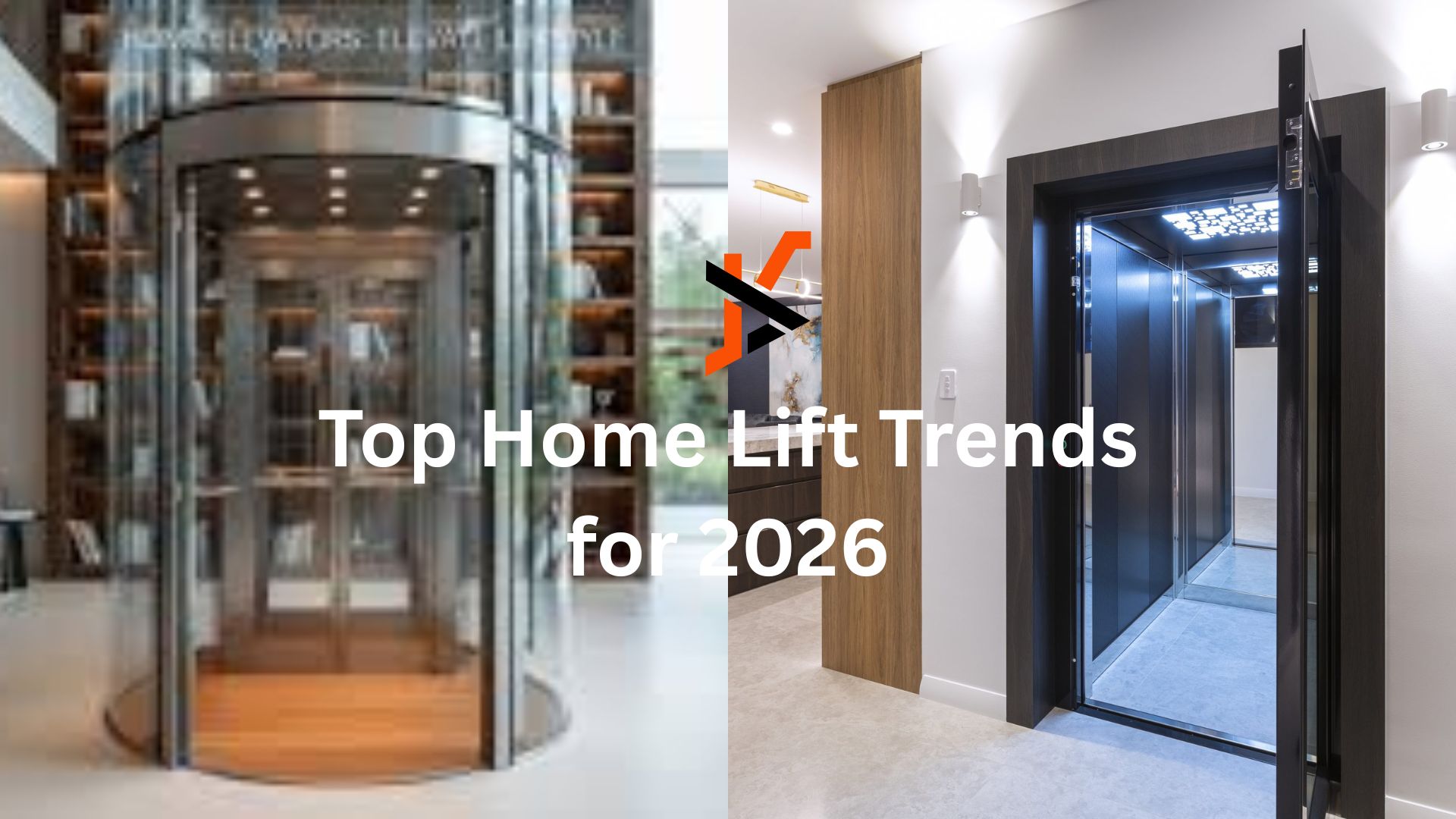
The home lift industry is evolving fast, and 2026 is shaping up to be a year where some genuinely cool innovations become mainstream.
From the trends expected to be witnessed in home lifts in 2026, home lifts are anticipated to be smarter, more environmentally friendly, more aesthetically pleasing, and more accessible. A home lift today is a mature product, having reached the implementation stage, offering impressive features at affordable prices.
Home lifts have thus matured beyond the experimentation of the past, resulting in solutions that enhance the quality of life.
Smart Home Integration Is Now Standard
Voice control and smartphone apps aren’t bonus features anymore, they’re expected basics.
One of the most significant developments is noticed in lift solutions which identify and respond to the usage patterns of users. For example, you normally use the lift every morning around 7 a.m., intelligent systems allocate it to your floor before your arrival.
Looking ahead to 2026, there is expected to be an increased use of AI-driven functionalities, including predictive maintenance that allows consumers to be alerted to possible problems before they occur, energy optimization based on usage patterns, and integration functionality for whole-home automation systems.
Design Is Now High-End
The days of elevators that look like industrial equipment are over and customization options have exploded. Want wood paneling that matches your home’s existing trim? Or maybe Contemporary metal finishes? You can have it all.
Custom lighting, flooring options that coordinate with your home, even artistic glass panels, the level of personalization is just incredible nowadays. Minimalistic control panels with touchscreen displays are supplanting traditional button panels.
The present setup offers a clean and elegant look and is much closer to high-end home components. Learn more about Premium Home Lift Elevators Design Cibes, swedish manufacturer since 1947.
Compact Designs Are Getting Even Smaller
Machine-room-less (MRL) technology has advanced to the point where even wheelchair-accessible lifts can fit in surprisingly small footprints.
What is being noticed is the installation of these systems in spaces no bigger than 12-15 square feet on each floor, or about the size of a small closet.
There is also an increase in the usage of through-floor lifts because of the minimal space needed and lower installation expense. These systems are ideal for homes because, where a standard shaft would be invasive, these have an open platform.
Whisper-Quiet Operation Is Non-Negotiable
In modern elevators, sound emissions are so low that you can even converse while they are operating.
Noise-emitting elevators are no longer popular because of progress in motor technology and advancements in mechanical systems related to noise insulation. In condominiums, sound transmission is given high priority because of the possibility of elevator system operation close to home offices or sleeping areas.
Quietness in their operation also represents the aspect of good engineering; a smooth and quiet operation of different systems shows that everything works most efficiently.
The future of home accessibility looks pretty good. And that future is available right now.
