

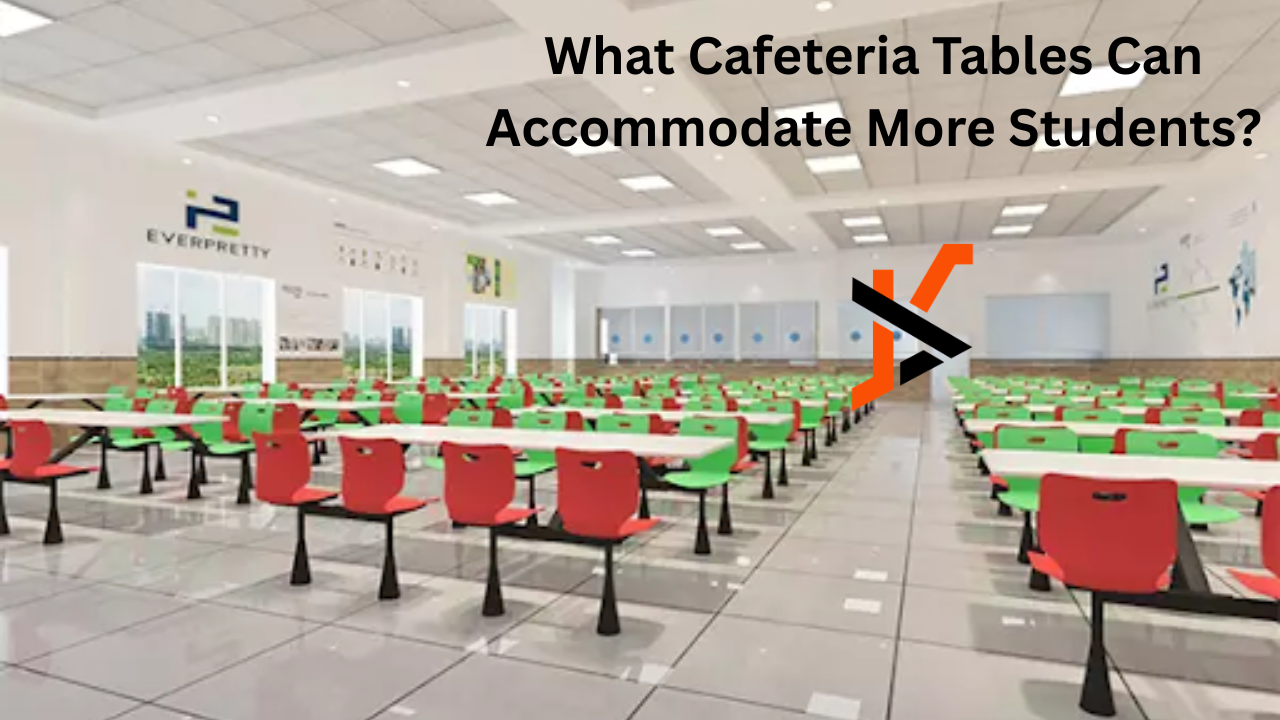
After the lunch bell rings, students pour into the cafeteria at the same time. Long queues form quickly. Students with full trays wander, searching for an open seat, and movement between aisles slows down.
These issues not only affect the dining experience but also cut into valuable break time and create unnecessary stress. At the heart of this bottleneck is the cafeteria table number and layout.
So, how to optimize the cafeteria table layout so that more students can be served efficiently within a limited dining hall area? In order to answer this question, we first need to see the different types of cafeteria tables available in the market and their efficiency.
Types of Cafeteria Tables: How Efficient Are They?
Different cafeteria table shapes provide different levels of seating efficiency and movement convenience. Choosing the right type is important when planning a cafeteria that must handle large student volumes in a short period of time.
- Rectangular Tables
Rectangular tables are the most space-efficient option for school cafeterias. Students typically sit along both long sides, maximizing the number of occupants per table. They can be arranged in rows, grouped together, or placed against walls to maximize seating density. Their straight edges reduce wasted gaps between tables and make it easy to control aisle widths.
These tables are ideal for:
- Large dining halls.
- High-traffic schools, such as primary and middle schools.
- Spaces that require systematic seating.
- Round Tables
Round tables support good social interaction, as everyone faces the center, encouraging conversation. From a space perspective, a round table eliminates awkward corner seats, allowing for flexible seating around its entire perimeter.
However, it takes up more floor space. They also create irregular gaps around the edges, reducing the number of tables that can fit in a cafeteria. Movement around round tables can be slower during peak times.
These tables are best suited for:
- Cafeterias with fewer students, such as some universities.
- Staff dining rooms
- Areas focused on comfort rather than accommodating more students.
- Square Tables
Square lunch tables for schools provide moderate seating capacity and can be arranged in multiple ways depending on the needs of the cafeteria. They can be placed together to serve larger groups or used individually for smaller seating arrangements. They save more space than round tables, but still do not match the seating efficiency of rectangular tables in crowded dining halls.
A square table for cafeterias is best suited for:
- Mixed-use dining spaces
- Flexible layouts
- Medium-sized cafeterias
- Efficiency Summary
Here is a quick table summarizing school cafeteria tables:
| Table Type | Seating Efficiency | Space Usage | Best Use Scenario |
| Rectangular | High | Excellent | Large cafeterias, peak-hour dining in primary and middle schools |
| Round | Moderate | Moderate | A flexible solution in universities or comfort-focused areas |
| Square | Moderate | Good | Flexible or mid-sized cafeterias |
How to Improve Space Utilization in the Cafeteria?
After selecting the table types that fit the cafeteria’s needs, the next step is to plan the layout carefully. Small adjustments in dimensions and aisle design can significantly increase the number of students who can dine comfortably within the same space.
Here are the two most important factors to consider in this regard:
- Table and Chair Dimensions
Choosing the right dimensions has a direct impact on how many seats can fit into the hall. Tables that are too wide reduce seating efficiency. One that is too narrow leaves no room for trays and personal items. A common dimension of about 120×75×75cm (for reference only) is often suitable for lunch tables for schools.
Consider using a cafeteria bench instead of individual chairs for rectangular tables. Benches can seat more people in the same linear space, and make it easier for students to slide in and out. However, ensure some tables have individual chairs for accessibility and student preference.
- Aisle Design Considerations
Even a well-furnished cafeteria will feel congested if the aisles are too narrow. Clear paths between rows of tables help students move in and out without causing delays.
Wider aisles near the serving area or tray return points reduce traffic buildup during peak times, even with students carrying trays. Maintaining unobstructed pathways also supports safety and allows staff to manage the dining hall more efficiently.
Custom Cafeteria Tables from EVERPRETTY Furniture
Sometimes, the perfect solution for your unique space isn’t found in a standard catalog. This is where the value of customization becomes clear. EVERPRETTY Furniture specializes in crafting cafeteria tables that are not just furniture, but tools for space optimization.
EVERPRETTY Furniture understands that every school dining hall has its own shape and traffic patterns. They allow you to break free from one-size-fits-all limitations. Do you need a slightly narrower rectangular table to fit one more row into the cafeterias? Or unique round tables to create a distinctive dining hall? Perhaps you want integrated cafeteria bench seating.
With EVERPRETTY Furniture, you define the parameters: exact dimensions, shape, and color to match your school.
- All cafeteria tables and chairs are manufactured with sturdy frames and surfaces that handle constant friction, frequent cleaning, and heavy use.
- Each table is produced under strict quality control and complies with international standards. This ensures long-term safety and reliability suitable for large student populations.
Conclusion
An efficient cafeteria layout makes a noticeable difference in how smoothly students move, find seats, and finish their meals on time. A clear understanding of table types, seating capacity, and aisle spacing allows schools to make better use of the space. EVERPRETTY Furniture offers durable and customizable cafeteria tables and chairs that support high-traffic environments. Contact them now for a customized solution!
