

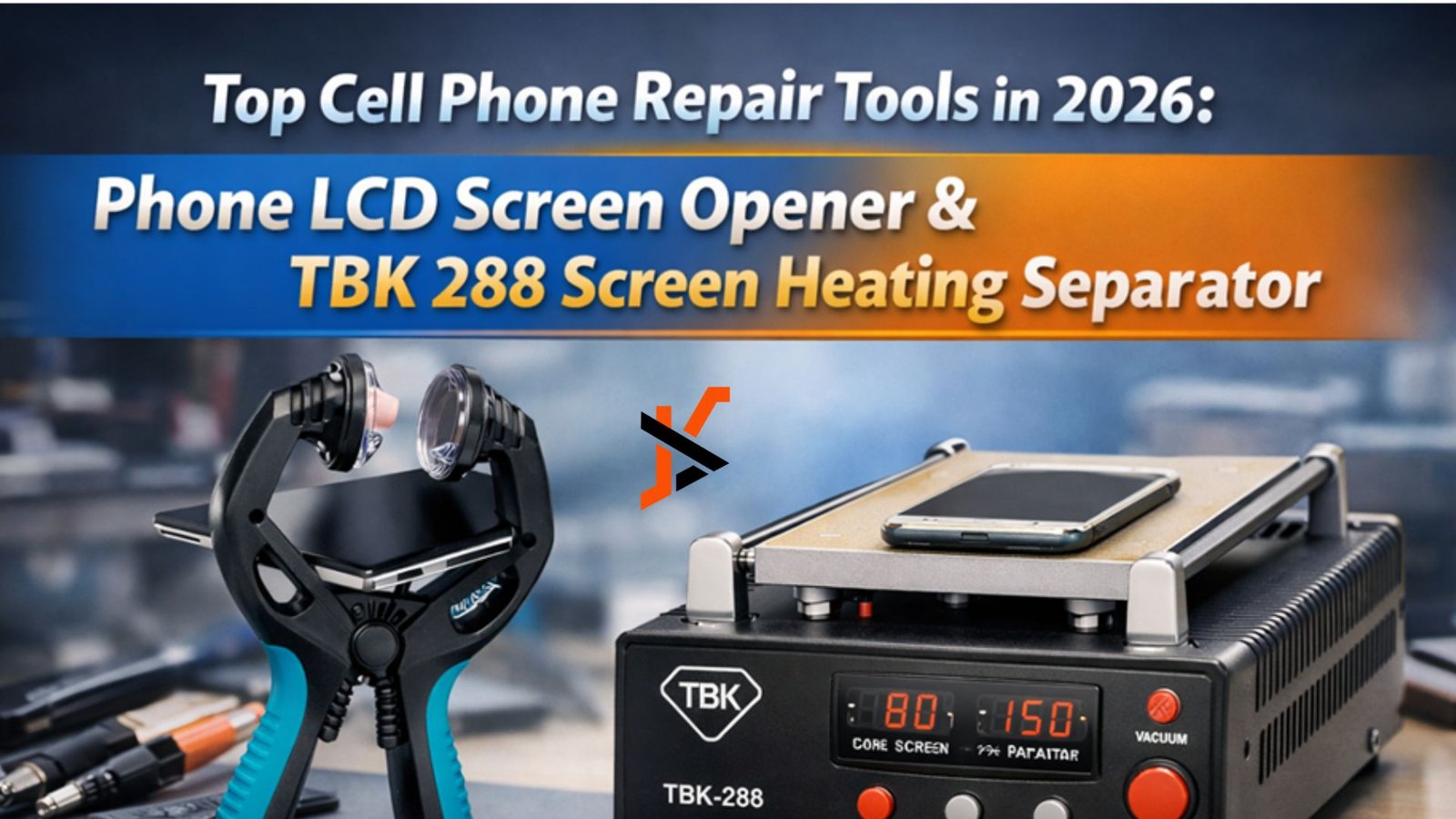
With the continuous evolution of smartphone manufacturing processes in 2026, the widespread application of edge-to-edge bonding technology and high-strength waterproof adhesives has made traditional disassembly methods no longer applicable. Whether for DIY enthusiasts seeking cost-effectiveness or professional repairers pursuing high turnover rates, possessing a scientific disassembly and assembly plan has become an industry consensus. DIYFIXTOOL will provide an in-depth analysis of a core tool for current screen repairs.
I. Challenges and Demands
As smartphones become more powerful, the complexity of their internal structures is also increasing.
1. Diversification of Repair Needs
The current mobile phone repair market is mainly composed of four groups. First are DIY users who want to reduce costs by purchasing spare parts themselves; second are professional technicians pursuing high-precision operations; third are various mobile quick-repair points; and finally, small repair shop owners who need to increase service throughput.
2. The Cost of Incorrect Disassembly
Without the support of professional equipment, forcibly prying the screen based solely on experience can easily lead to irreversible consequences. Common risks include the LCD panel cracking under uneven stress, internal flex cables being accidentally damaged by prying tools, local temperatures of heat guns being too high causing casing deformation, and a significant increase in repair man-hours due to cumbersome operations.
3. Detailed Explanation of Screen Heating Separator
Before starting the physical operation of screen separation, it is crucial to weaken the adhesive. If the screen is opened violently, the phone will certainly be damaged.
· Failure Manifestations and Preparatory Work
a. Failure Scenarios: Cracked screen, abnormal display, or touch failure, requiring replacement of the entire display module.
b. Preparatory Work: Before heating, ensure the phone’s battery level is below 25% to reduce the risk of battery swelling due to heat. At the same time, clean the oil and dust on the body surface to prevent odors during heating or affecting the suction cup’s grip.
· Technical Advantages of TBK 288
This device not only provides uniform constant temperature heating but also integrates an intelligent temperature control system.
a. Precise Temperature Control: It ensures that the adhesive softens simultaneously across the entire surface, avoiding local overheating that could damage internal photosensitive components.
b. Risk Reduction: After uniform heating, the adhesion between the screen and the middle frame drops significantly, preventing secondary cracks during the removal process.
c. Improved Smoothness: The softening process under temperature control makes subsequent separation operations as smooth as cutting through butter.
3. Application of LCD Screen Opener
When the TBK 288 completes the thermal preparation, the mobile phone LCD screen opener takes over for physical separation, providing the physical guarantee for precise and gentle disassembly.
· Functional Positioning of the Tool
This opener is specifically designed for precision separation. It uses a mechanical structure to evenly distribute upward pulling force along the edges of the screen, avoiding the common stress concentration points found in manual prying.
· Core Advantage Analysis
a. Minimization of Physical Stress: By fixing the components through the structural parts, the pulling force is kept within a safe range.
b. Cross-model Compatibility: High-quality openers feature adjustable gears, making them compatible with various sizes ranging from common Android models to the latest iPhone Pro Max.
c. Efficiency Improvement: Compared to the traditional combination of suction cups and prying slices, this tool can reduce disassembly time by nearly 50%.
II. Screen Disassembly Repair Steps
Combining heating with physical opening is the mainstream standardized workflow in 2026. Here’s the repair approach built around these two tools:
Step 1. Preheating Phase
Place the device on the TBK 288 heating platform. Set the recommended temperature according to different models (usually 80°C to 90°C) and wait for the adhesive to loosen completely.
Step 2. Fixing and Suction
Align the powerful suction cup of the LCD screen opener with the center of gravity of the screen. Ensure the suction cup is tightly bonded to the screen surface without leaving any air gaps.
Step 3. Separation Operation
Smoothly start the screw mechanism or lever mechanism of the opener. While maintaining a slight upward pulling force, if resistance points are encountered, appropriately use extremely thin plastic prying slices to slide along the edges.
Step 4. Internal Cleaning
After the screen is separated, use a professional cleaner to remove the old residual glue on the middle frame. This is a key step to ensure the new screen is installed flat and the waterproof performance is restored.
III. Professional Repair Toolkit
Although the two devices mentioned above are core, an efficient repair station also needs the support of other auxiliary tools.
1. Basic Repair Toolkit
· Plastic Prying Tools and Anti–static Tweezers: For handling flex cables and tiny components.
· Specialized Suction Cups and Adhesives: Used for final assembly and sealing.
· Anti–static Mats and Wrist Straps: To protect the motherboard from instantaneous static breakdown.
2. Avoiding Common Misunderstandings During Repair
Even with top-tier tools, operating standards are equally important. The following are high-frequency errors summarized within the industry:
· Ignoring the Heating Step: Due to impatience, forcing the screen open before the adhesive has fully softened will not only damage the screen but may also pull and break the motherboard connectors.
· Temperature Control Failure: Excessive heating can cause spots on the backlight layer or melt the casing. The significance of the TBK 288 lies in its ability to monitor temperature in real-time through a digital display.
· Violent Opening: The opener is only an assistant; the operator still needs to sense resistance. If the pulling force feels abnormal, check for hidden screws or stubborn adhesive points.
IV. Summary
Mobile phone repair tools are developing towards automation and intelligence. Smart repair tools like the TBK 288 screen heating separator and LCD opener will be the future bellwether of the Mobile phone repair industry. For repair shops committed to improving business performance, investing in these advanced mobile phone repair tools can directly bring higher customer satisfaction and lower rework rates.
