

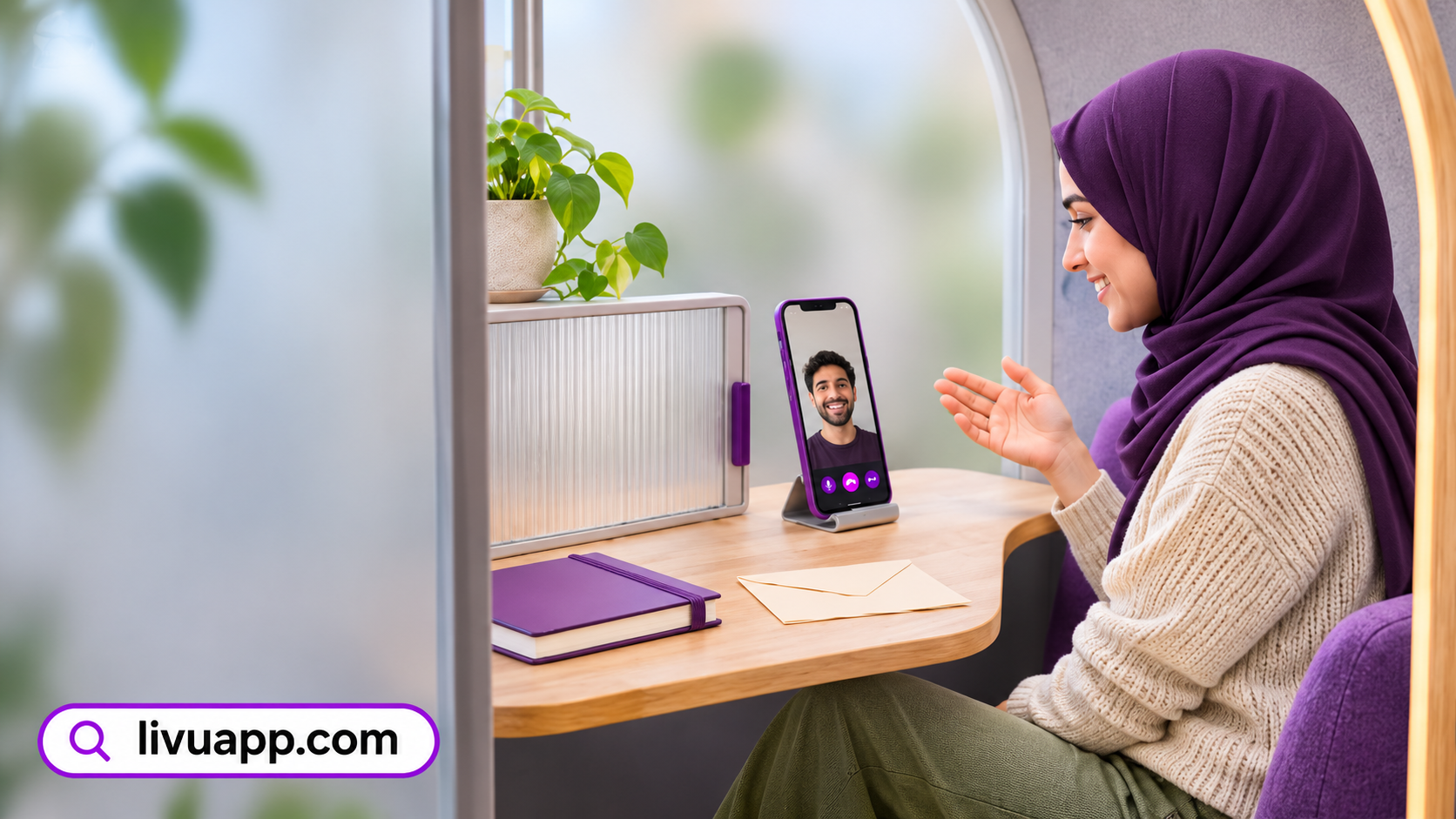
A comfortable online conversation depends on more than finding an interesting topic. It also depends on whether both people feel that they can choose what to share, what to keep private, and when to end the interaction.
During a chat video live, personal boundaries may not be visible at first. One person may enjoy showing their surroundings, while another prefers a neutral background. Someone may answer questions about hobbies but avoid discussing work, family, or location.
A video live chat becomes easier when participants treat privacy as an active part of communication rather than something that matters only after a problem occurs.
Begin With the Right to Choose
A question is not automatically inappropriate simply because it is personal. The important issue is whether the other person can decline without being pressured.
Useful phrases include:
- “You do not have to answer if that feels too personal.”
- “Would you rather talk about something else?”
- “Can I ask a more personal question?”
- “A general answer is completely fine.”
These phrases give the other person control over the depth of the conversation. They also show that curiosity does not need to override comfort.
Share Information in Layers
Trust rarely develops all at once. People often begin with broad information and become more specific over time.
Someone might first share their country, later mention a general region, and eventually discuss a favorite local place. They do not need to reveal a neighborhood, workplace, or exact address to make the conversation meaningful.
A useful rule is to share information in layers and notice how the interaction feels before moving deeper. Once personal details are revealed, they cannot always be taken back.
Keep Exact Locations Private
Location questions can sound harmless: “Where are you right now?” or “Which building is that?” However, combining several details may make someone identifiable.
Safer alternatives include:
- Describing the type of area rather than its name
- Mentioning a city without naming a street
- Discussing a commute without revealing the route
- Sharing a view without showing recognizable signs
- Talking about a workplace without naming the employer
General descriptions can still produce interesting conversation while protecting real-world privacy.
Review the Background
A camera captures more than a face. Mail, photographs, certificates, work documents, medication, school materials, and reflections may reveal unintended information.
Before a call, check the visible area for:
- Full names
- Addresses
- Phone numbers
- Identification documents
- Financial information
- Workplace or school details
- Images of people who did not agree to appear
A plain wall or virtual background is not required, but a quick review can prevent accidental exposure.
Remember That Reflections Count
Mirrors, windows, framed pictures, and glossy surfaces can reveal parts of a room outside the main camera frame.
A reflection may show another person, a computer screen, an entrance, or private documents. Move the camera slightly and check the full image before beginning.
This is particularly important when using a wide-angle camera, which may capture more of the environment than expected.
Ask Before Taking Screenshots
A video conversation is temporary, but a screenshot can make a moment permanent. It can also be shared outside the original context.
Do not take or distribute screenshots without clear consent. If there is a reason to save an image—perhaps both participants completed a creative activity—ask first and explain how it will be used.
Consent for the conversation is not automatically consent for recording, photography, or publication.
Treat Recording as a Separate Decision
Recording requires explicit agreement from everyone involved. A person should understand that recording is happening, why it is needed, how long it will be kept, and who may see it.
Silence is not permission. A brief notification hidden in an interface may also be insufficient if the other person does not understand what it means.
For casual social interaction, recording is usually unnecessary. Staying in the moment helps preserve the natural and private character of the exchange.
Protect Other People in the Room
Roommates, relatives, coworkers, and members of the public may enter the background. They did not necessarily agree to join the conversation.
If someone appears, reposition the camera or pause until privacy is restored. Avoid turning the device toward them for an introduction unless they clearly agree.
The same principle applies to children, whose privacy requires particular care.
Avoid Pressuring Someone to Show More
Requests such as “Show me your whole room,” “Turn the camera around,” or “Prove where you are” can feel intrusive.
A person may have many reasonable reasons for limiting the camera view. Their home may be shared, untidy, private, or simply something they do not wish to display.
Accepting “I would rather not” without asking for a justification is an important sign of respect.
Discuss Work Without Identifying the Workplace
Work is a common conversation topic, but exact employer names, building details, schedules, and internal information can create privacy or professional risks.
Ask about the type of work, favorite tasks, skills, or general routine instead. Someone can describe what they enjoy about teaching, design, hospitality, or engineering without naming a company.
If the person answers generally, do not repeatedly ask for greater specificity.
Be Careful With Social Media Requests
Moving immediately to another platform can expose a full name, friend network, location history, old photographs, or professional information.
Do not treat reluctance as suspicious. Some people separate social discovery from existing personal accounts until trust develops.
A connection can continue through the platform’s available communication features without requiring access to someone’s wider digital identity.
Notice Indirect Pressure
Pressure is not always an explicit demand. It can appear through teasing, repeated questions, disappointment, or statements such as:
- “If you trusted me, you would tell me.”
- “Everyone else shares this.”
- “Why are you being so secretive?”
- “It is only a screenshot.”
- “You already told me part of it.”
Trust is not demonstrated by abandoning boundaries. A respectful person allows information to be shared voluntarily.
Set Boundaries Without Overexplaining
A clear boundary does not require a long defense.
Useful responses include:
- “I prefer to keep that private.”
- “I am not comfortable showing the room.”
- “I do not share my exact location.”
- “Please do not take a screenshot.”
- “Let’s choose another topic.”
- “I am going to end the call now.”
Short, direct statements reduce ambiguity. The other person’s response also provides useful information about whether the interaction should continue.
Respect Topic Changes
Someone may answer briefly and then introduce another subject. That is often a polite way of setting a boundary.
Follow the new topic rather than returning repeatedly to the original question. Respectful conversation requires noticing both spoken answers and conversational signals.
If you are unsure, ask once: “Would you rather leave that subject?” Then accept the response.
Know When to End the Interaction
A conversation should end if someone ignores repeated boundaries, requests sensitive information, attempts to record without consent, or makes the other participant feel unsafe.
Ending a call is not rude when it protects personal comfort or security. Users can also use available safety and reporting features when an interaction violates platform rules.
No explanation is required before leaving an uncomfortable situation.
Make Privacy Mutual
Boundaries should apply in both directions. A person who protects their own location should also avoid requesting someone else’s. Someone who does not want screenshots should not capture the other participant.
Mutual privacy creates a more balanced interaction. It shows that safety is not a barrier to connection but part of the trust that makes connection possible.
Comfort Creates Better Conversation
Privacy does not prevent people from getting to know each other. It allows them to do so at a pace that feels voluntary and sustainable.
A chat video live experience becomes more comfortable when both participants can say no, change the subject, or limit what appears on camera. Likewise, video live chat becomes more trustworthy when consent applies not only to joining the call but also to screenshots, recordings, personal questions, and continued contact.
The strongest conversations are not built by learning everything immediately. They grow when both people know that their boundaries will be heard.
