

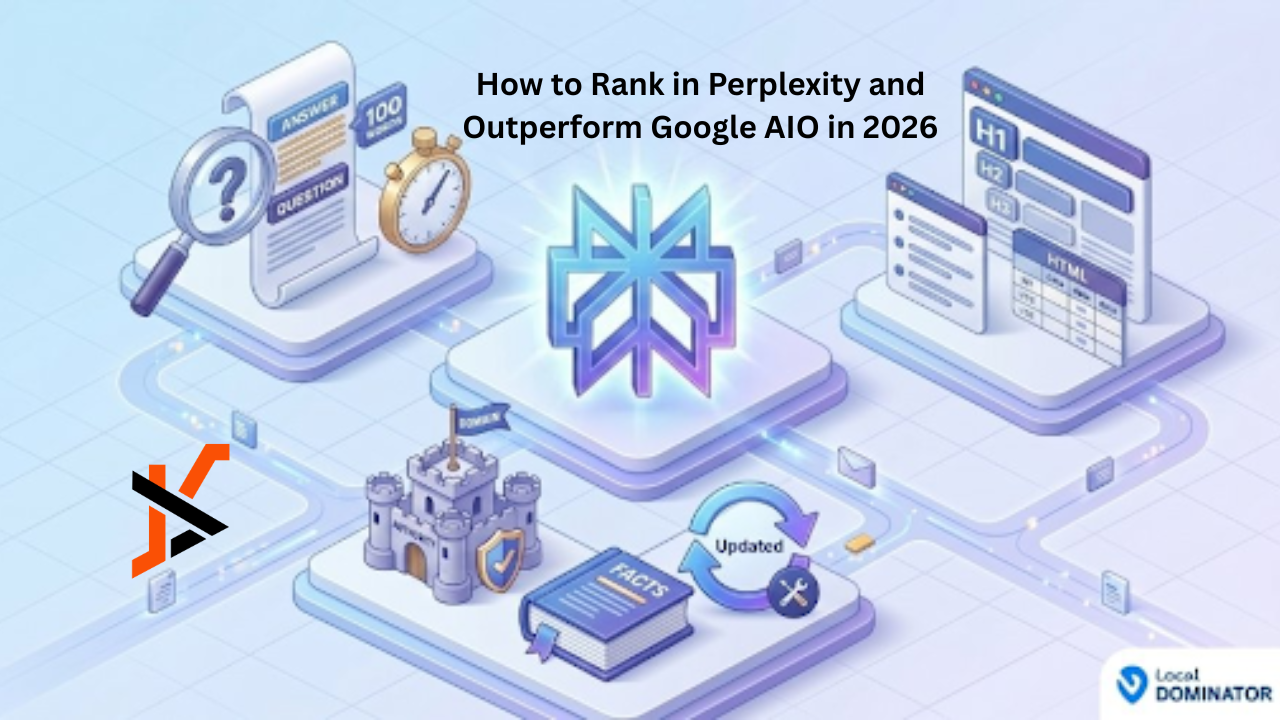
To learn how to rank in Perplexity, you must format your digital content to answer specific user questions directly within the first 100 words of the page. This approach requires clear HTML headings, bulleted lists, and clean data tables instead of long introductory paragraphs. Perplexity prioritizes highly authoritative niche domains that publish factual, frequently updated data. By placing an objective summary paragraph immediately beneath your primary heading, you align your website with the exact extraction requirements of generative search models.
Why Legacy SEO Tools Fail in the Conversational Search Era
Traditional search engine optimization focuses on ranking blue links by tracking backlinks and click-through rates. Legacy SEO platforms rely entirely on this model, which makes them incapable of measuring performance in generative engines. Large Language Models do not use standard keyword positions to recommend brands. Instead, they scan their internal indexes to extract specific facts and synthesize conversational answers.
Because legacy tools cannot track real-time AI snapshots or citation sources, agencies cannot see where their traffic originates. If you rely on old keyword trackers, you remain blind to whether an AI engine cites your domain or skips it entirely due to a formatting error.
Establishing the 2026 Benchmark Test Case for AI Search
To measure your true visibility in modern search, you must test your content against realistic conversational scenarios. Users no longer search using short phrases. They type complex questions with a specific intent. A proper benchmark test requires tracking multiple natural language prompts across four distinct categories of user intent.
- Informational Intent: Questions that ask for definitions, concepts, or step-by-step processes.
- Transactional Intent: Queries from users who are ready to purchase a specific service or software.
- Commercial Intent: Comparisons between different brands, tools, or local providers.
- Navigational Intent: Searches aimed at finding a specific company profile or local office location.
Monitoring these intents manually across multiple search applications is impossible for busy marketing agencies. A brand needs an objective way to see exactly how different platforms read and present their corporate information.
How Perplexity and Google AIO Select Cited Sources
Perplexity operates as a direct answer engine. When a user submits a prompt, the system parses the text and activates PerplexityBot to crawl relevant web pages. The engine filters for high information density, extracts the core facts, and generates a unified summary with clickable footnotes. Google AIO operates differently by pulling information from a broader traditional index while applying its own layout preferences.
Both systems heavily favor clean document structure over long, narrative text. The following table displays how easily generative engines can scrape data based on the specific HTML formatting of your web page.
| Format Type | AI Extraction Ease | Best Used For |
| Schema Markup | Very High | Labeling entities and FAQ data |
| Markdown Tables | High | Product comparisons and data sets |
| Numbered Lists | High | Step-by-step processes and rankings |
| Unstructured Paragraphs | Low | Opinions and long narrative text |
Solving the Multi-Engine Tracking Problem
Because different engines use unique extraction methods, you need a specialized solution to audit your brand presence across the entire digital ecosystem. You can deploy the AI Tracker from Local Dominator to scan multiple major platforms simultaneously, including Perplexity, ChatGPT, Gemini, Google AI Mode, Claude, and Grok.
You set up an automated tracking campaign using four straightforward steps.
- Business Info: Enter your target domain, physical location, and the specific AI engines you need to monitor.
- Topics: Input your core search terms categorized by user intent to let the system analyze your industry landscape.
- Prompts: Review the natural language questions that the system automatically generates based on your chosen topics.
- Review: Launch the automated scan to read the engines and view your performance metrics.
The tool calculates an objective Visibility Score by analyzing your mention frequency, active citation positions, engine coverage, and the overall sentiment of the AI responses. The dashboard also displays your top AI-driven competitors and reveals critical content gaps so you can adjust your formatting strategy immediately.
The Playbook for Optimizing Content for LLM Extraction
Securing consistent citations requires a strict formatting strategy. You must implement the Bottom Line Up Front rule across every informational page on your site. State the final answer immediately, then use a defined formula to build your definitions. Write your core introductory text using the standard structure where a subject is clearly defined as a specific category that helps a particular audience achieve a definitive benefit.
For local business tracking, you must eliminate any risk of factual confusion. Large Language Models view inconsistent business descriptions as an explicit hallucination risk. You can secure local citations by hardcoding your operational data directly into your site architecture.
- Standardize Contact Details: Ensure your corporate name, physical address, and phone number match exactly across your website, directory profiles, and map listings.
- Inject Structured Data: Place valid JSON-LD code into your website footer to feed coordinates, opening hours, and accepted payment methods directly to search bots.
- Build Service FAQs: Create dedicated landing pages for each service, using clean HTML lists to answer common pricing and timeline questions.
- Collect Descriptive Reviews: Guide your customers to name the specific service they received and their exact city when they publish online feedback.
The New Baseline for Local Visibility
Optimizing for modern search engines requires a complete shift from legacy keyword strategies to precise data structure. Brands that provide clear, dense, and perfectly formatted answers will continue to capture high-intent users, while unorganized websites will disappear from conversational summaries entirely. Tracking your historical visibility scores across multiple engines allows you to protect your digital footprint as AI indexes evolve.
Local Dominator is a comprehensive platform that combines local SEO management with AI search tracking, making it an excellent choice for marketing agencies looking to integrate GEO strategies. (Generative Engine Optimization) with their traditional SEO workflows. The software centralizes geo-grid map tracking, traditional SERP data, citation building, Google Business Profile management, and AI brand mention audits into a single operational dashboard.
