

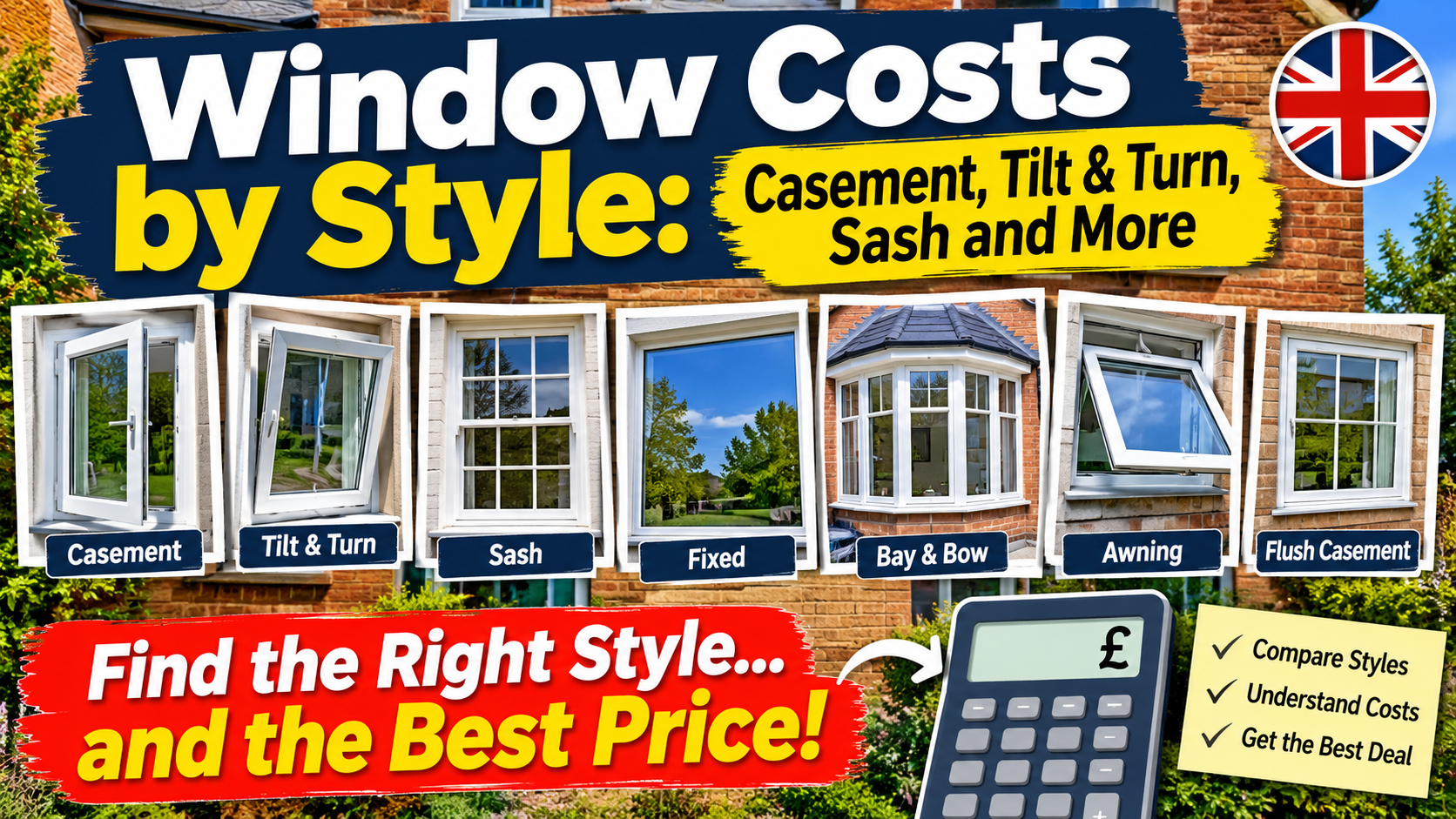
Walk down any British street and you will spot a surprising variety of windows. Some swing open on hinges, some slide up and down, some tilt inwards at the top, and some do not open at all. Each style has its own look, its own strengths and, crucially, its own price tag.
If you are planning a replacement, choosing the right style is as much about budget as appearance. This guide compares the most common window styles found in UK homes, explains what influences their cost and shows you how to weigh up the options sensibly. Along the way, we will look at how a window cost calculator can help you test different styles side by side before you speak to a single supplier.
A Note on Pricing
Window prices vary depending on size, material, glazing, finish, location and installer, so any comparison between styles should be read as general. In broad terms, simpler windows with fewer moving parts cost less, and more complex or traditional designs cost more. Use this article as a guide to relative costs, and always get written quotes for exact figures.
1. Casement Windows
What they are: Casements are hinged at the side and open outwards like a door. They are one of the most common styles in the UK and come in single, double or multi-pane configurations.
Cost: Casements are generally at the more affordable end of the scale. They are simple to manufacture, widely available in standard sizes and easy to install.
Pros:
- Good value for money
- Excellent ventilation when fully open
- Tight seal when closed, which helps with draught-proofing
- Available in uPVC, timber and aluminium
Cons:
- Open outwards, which can be awkward in tight spaces
- Large casements can be heavy and need strong hinges
- May not suit period properties that originally had other styles
2. Tilt and Turn Windows
What they are: These popular windows open in two ways. They can tilt inwards from the top for ventilation, or swing fully inwards like a door, which makes cleaning from the inside simple.
Cost: Tilt and turn windows usually cost a little more than basic casements because of the more complex hardware.
Pros:
- Easy to clean, especially on upper floors
- Secure ventilation in the tilted position
- Good insulation and airtightness
- Practical for flats and multi-storey homes
Cons:
- Open inwards, so you need clear space around the window
- More complex hardware that may need occasional adjustment
- Less common on traditional British housing
3. Sash Windows
What they are: Sash windows slide vertically, with one or both panels moving up and down. They are strongly associated with Georgian and Victorian architecture.
Cost: Sash windows are often the most expensive of the common styles, particularly traditional timber box sashes with weights and cords. Spring-balanced and uPVC versions are generally cheaper.
Pros:
- Beautiful and authentic on period homes
- Good ventilation control, as you can open the top and bottom
- Often required or preferred in conservation areas
- Can be restored and repaired for many years
Cons:
- Higher upfront cost
- Timber versions need regular maintenance
- More complex to fit and repair than simpler styles
4. Fixed Windows
What they are: Fixed windows do not open. They are simply a frame with glass in it, used to let in light and offer views.
Cost: Fixed windows are usually the cheapest style because they have no moving parts or hardware.
Pros:
- Lowest cost
- Excellent for airtightness and insulation
- Great for large expanses of glass
Cons:
- No ventilation
- Cannot be opened for cleaning or escape, so building regulations may require openable windows in certain rooms
5. Bay and Bow Windows
What they are: Bay windows project outwards from the wall, usually with three or more angled sections. Bow windows have a gentle curve instead of angles.
Cost: Bays and bows are significantly more expensive than a single flat window because they involve multiple panels, structural elements and more complicated installation.
Pros:
- Adds light and a sense of space
- Creates a feature on the front of the house
- Can increase the appeal of the property
Cons:
- High cost
- Complex installation, sometimes requiring structural support
- More surfaces to maintain and insulate
6. Awning and Top-Hung Windows
What they are: These are hinged at the top and open outwards from the bottom, which allows ventilation even when it is raining.
Cost: Prices are generally similar to or slightly above basic casements.
Pros:
- Rain-friendly ventilation
- Useful in bathrooms, kitchens and small spaces
Cons:
- Limited opening size
- Less common in standard UK housing
7. Flush Casement and Heritage Styles
What they are: Flush casements are designed to sit flush within the frame, giving a more traditional, period-appropriate appearance. They are popular for heritage and conservation settings.
Cost: They tend to cost more than standard casements because of the finer detailing and often higher-quality materials.
Pros:
- Authentic appearance for period properties
- Can satisfy planning requirements
- Often built to a high standard
Cons:
- Higher cost
- May require more careful installation
A Quick Cost Comparison
| Style | Typical relative cost | Best suited to |
| Fixed | Lowest | Large glazed areas, light |
| Casement | Low to moderate | Most modern homes |
| Awning | Low to moderate | Kitchens, bathrooms |
| Tilt and turn | Moderate | Flats, upper floors |
| Flush casement | Moderate to high | Heritage-style properties |
| Sash | Moderate to high | Period homes |
| Bay and bow | High | Feature windows |
What Else Affects the Price?
Style is only one piece of the puzzle. The final figure is also shaped by:
- Material: timber usually costs more than uPVC, with aluminium varying by finish.
- Size: larger windows use more material and cost proportionally more.
- Glazing: upgrades such as low-emissivity glass or triple glazing add to the cost.
- Finish and hardware: colours, handles and locks all affect the price.
- Installation: access, scaffolding and making good influence the labour cost.
- Property type and location: older houses and some regions can be more expensive.
How to Compare Styles Using an Estimator
The easiest way to see the difference between styles is to try them in an online tool. A good window cost calculator lets you keep everything else the same and change only the style, so you can see exactly how much each one adds or saves.
Here is a simple approach:
- Measure your windows and note the sizes.
- Choose your material and glazing and keep them fixed.
- Switch between styles, such as casement, tilt and turn and sash, and note the price for each.
- Check suitability. The cheapest style may not suit your property or planning rules.
- Add a contingency of around 10 to 15 per cent for surprises.
Choosing the Right Style for Your Home
Price is important, but it should not be the only factor. Consider:
- Your property’s character. A modern casement may look out of place on a Victorian terrace.
- Planning rules. Listed buildings and conservation areas often require specific styles.
- Practicality. Think about cleaning, ventilation, security and how much space is available around the window.
- Long-term value. A style that suits your home can protect or enhance its appeal.
Final Thoughts
Window style has a clear influence on cost, with fixed and casement windows at the more affordable end, tilt and turn in the middle, and sash, bay and heritage designs typically at the higher end. But the right choice is the one that balances budget, appearance and practicality for your particular home.
Take the time to compare styles properly, use a window cost calculator to see how the numbers change, and always confirm the final figures with a survey and written quotes. That way, you will choose windows that look right, work well and keep your costs under control.
