

A resting heart beats roughly one hundred thousand times a day. Multiply that across a year, and the cardiovascular system delivers well over thirty-five million contractions without a pause for maintenance. That relentless workload demands a specific kind of fuel infrastructure, and cardiologists have spent decades studying the single molecule that keeps the mitochondrial engines of cardiac tissue running smoothly. That molecule is coenzyme Q10, and its role in cardiac energetics is one of the more elegant stories in modern nutrition science.
This piece takes a different angle from the usual list of benefits. It focuses on the mechanics of cardiac energy, the specific ways CoQ10 supports the physiology of the heart, and how adults thinking about long-term cardiovascular resilience can integrate a high-quality coq10 supplement into a well-designed heart wellness plan. The goal here is understanding, so that decisions about supplementation come from clear reasoning rather than product marketing.
Inside the Cardiac Engine Room
Heart muscle differs from skeletal muscle in a critical way. It never enters a resting state that allows glycolytic energy production to dominate. Instead, it relies almost entirely on oxidative phosphorylation inside mitochondria, which are exceptionally dense in cardiac tissue. Roughly a third of the volume of a cardiac muscle cell is occupied by mitochondria, compared to a small fraction in most other cell types. This density reflects the metabolic reality of a tissue that cannot afford to pause.
Where CoQ10 Fits in the Chain
Coenzyme Q10 shuttles electrons between complexes I, II, and III of the mitochondrial electron transport chain. Without adequate CoQ10, this shuttle slows, the entire chain becomes less efficient, and ATP production drops. In cardiac tissue, even a modest drop in efficiency translates into measurable changes in contractility and ejection fraction. Studies of failing hearts consistently show reduced CoQ10 concentrations in myocardial tissue, and supplementation trials have measured meaningful improvements in cardiac function markers.
Antioxidant Role in Vascular Tissue
Beyond energy production, CoQ10 in its reduced ubiquinol form protects LDL particles from oxidation. Oxidized LDL is a central driver of arterial plaque formation, and preserving LDL in its unoxidized state is one of the quiet ways CoQ10 contributes to long-term vascular health. This is a reason cardiologists often view CoQ10 not merely as an energy nutrient but as a component of a broader cardioprotective strategy. Choosing a well-formulated coq10 supplement is a straightforward way to support both energetic and antioxidant pathways in cardiovascular tissue.
Clinical Contexts That Deserve Attention
The strongest evidence for CoQ10 supplementation clusters around specific cardiovascular contexts. Rather than making broad claims, it helps to understand the areas where clinical data is most consistent.
Statin Therapy and Muscle Support
Statin medications work by inhibiting HMG-CoA reductase, an enzyme central to cholesterol synthesis. That same enzymatic pathway produces coenzyme Q10. As a result, individuals on statin therapy show consistently reduced blood CoQ10 levels. Some experience muscle discomfort, weakness, or fatigue that improves when CoQ10 is added. While the research on statin-associated muscle symptoms remains active, the biological rationale for supplementation is strong enough that many cardiology practices routinely recommend it.
Congestive Heart Failure Adjunct Care
Landmark clinical trials, including the Q-SYMBIO study, examined CoQ10 as an adjunct to standard heart failure therapy. Results included improvements in symptom severity and reductions in major adverse cardiac events over long follow-up periods. CoQ10 is not a replacement for prescribed cardiac medications, but its role as a complementary nutrient is well established in this clinical space.
Blood Pressure Support
Meta-analyses of hypertension trials suggest CoQ10 can produce modest reductions in systolic blood pressure over eight to twelve weeks of consistent use. The effect is smaller than a first-line medication but meaningful within a broader lifestyle strategy, especially for individuals with borderline readings looking to build multiple supportive habits.
Making a Supplement Choice That Actually Works
The gap between a poorly absorbed CoQ10 product and a well-designed one is larger than most consumers realize. Because CoQ10 is fat-soluble and crystalline in structure, the delivery form determines how much of the dose ever reaches the bloodstream.
Softgel Format and Absorption
CoQ10 delivered in an oil-based softgel absorbs significantly better than the same amount in a dry powder capsule. The oil disperses the crystalline CoQ10 and allows the digestive system to package it into chylomicrons, the transport vehicles for fat-soluble nutrients. A soy-based oil carrier is a common and effective choice. When paired with a meal that contains additional fat, absorption climbs further.
Dose Considerations for Cardiovascular Goals
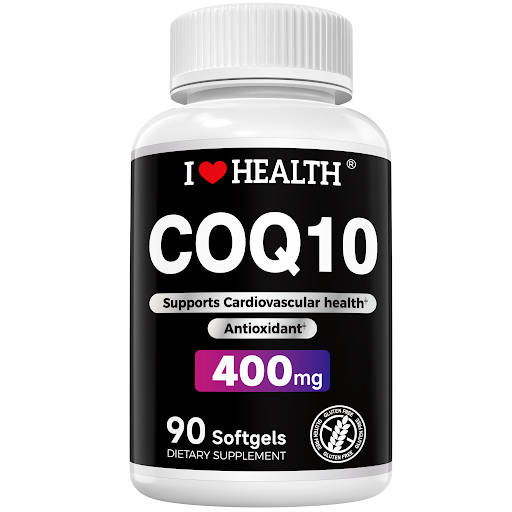
Cardiovascular research typically uses doses between 200 mg and 400 mg daily, with some heart failure trials going higher. A 400 mg softgel offers a clean way to reach the upper research range in a single serving, which is convenient for those following clinical dosing protocols. Users focused on general antioxidant support and moderate energy benefits may find 100 mg to 200 mg sufficient.
Ubiquinone vs Ubiquinol
Ubiquinone is the oxidized form, ubiquinol is the reduced form. The body converts one into the other as needed, and healthy adults handle ubiquinone conversion efficiently. Older adults or those with specific metabolic conditions sometimes prefer ubiquinol for its head start on the antioxidant side, but the price differential does not always justify the change for everyone. iLoveHealth offers softgels in a format that suits daily cardiovascular routines while keeping the delivery science straightforward.
Building a Long-Term Cardiovascular Nutrition Plan
CoQ10 works best inside a broader cardiovascular strategy. Omega-3 fatty acids from cold-water fish or a quality supplement complement CoQ10 by reducing systemic inflammation and supporting membrane fluidity. Magnesium supports vascular tone and rhythm regularity. Vitamin K2 works with vitamin D to direct calcium into bone rather than arterial walls. A Mediterranean-style eating pattern, regular walking or moderate aerobic activity, and stress management round out the framework. Supplementation is the final layer, not the first one, and its effects grow when it operates on top of solid daily habits.
Steady Beats and Long-Term Cardiovascular Care
The heart’s tireless work is powered by a molecule that most people have never named. Coenzyme Q10 sits at the intersection of energy production and antioxidant defense, exactly where cardiovascular tissue needs the most support. Restoring adequate levels through a well-formulated softgel is a targeted, research-backed step in a broader cardiovascular plan that also includes movement, nutrition, and appropriate medical care. Choose a delivery form designed for absorption, dose in a range that matches your goal, take it with a meal that contains healthy fat, and give it eight to twelve weeks before evaluating the result. Cardiovascular care rewards patience and consistency, and adding CoQ10 thoughtfully is one of the more evidence-supported ways to invest in the decades still ahead.
