

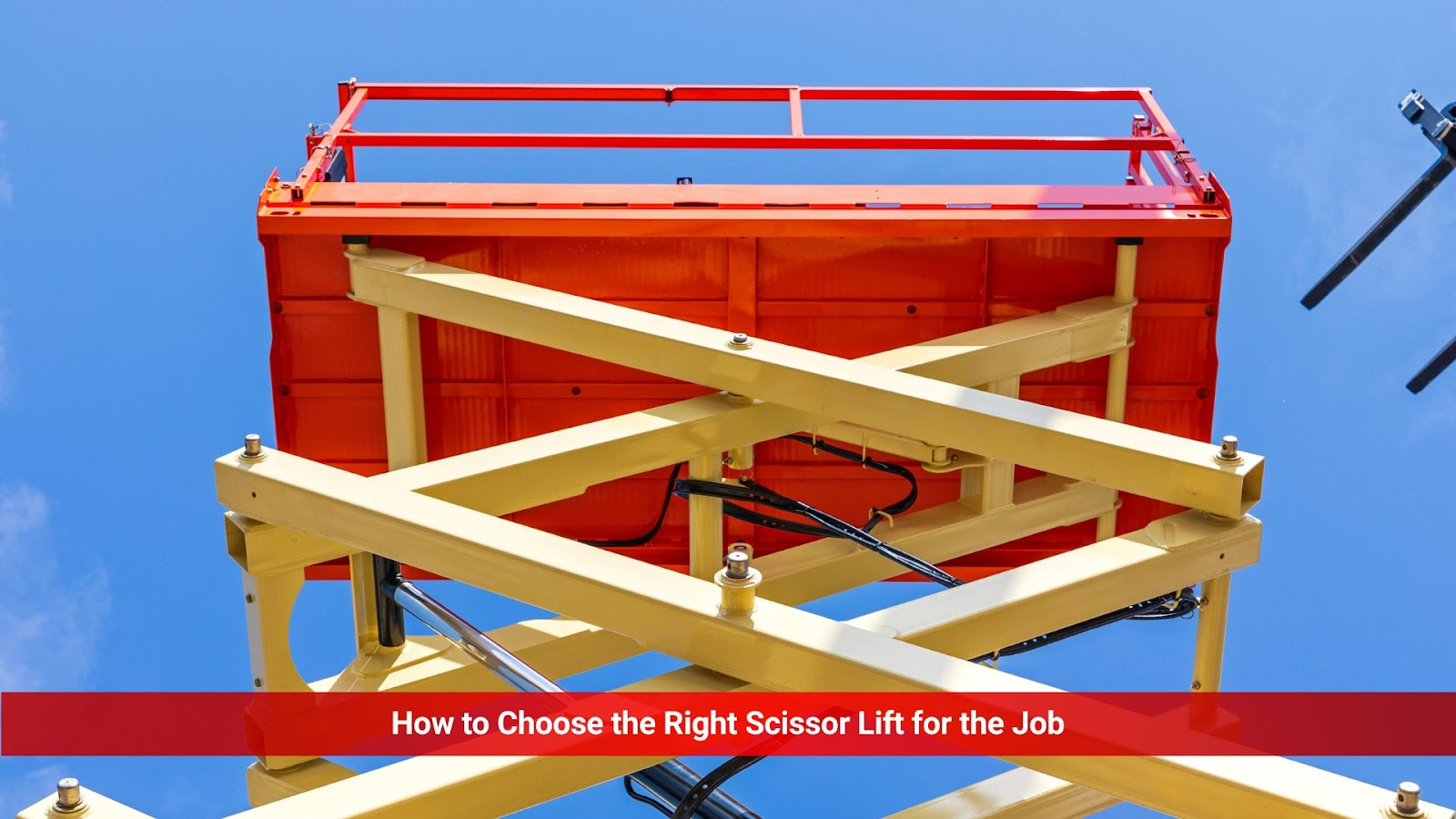
Scissor lifts come in a variety of sizes and specifications, each designed for different tasks and environments. Choosing the wrong lift can result in delays, safety risks, and added costs. This guide from Scissor Lift Hire is designed to help you select the right scissor lift for your specific project by considering key factors such as height, terrain, power source, and access limitations.
1. Determine the Required Working Height
The most important factor is how high you need to work. Scissor lifts are categorised by their platform height, but your actual working height will be around two metres higher than the platform. For example, a lift with a platform height of 8 metres provides a working height of approximately 10 metres. Measure the height of your task and choose a lift that offers sufficient reach without exceeding your needs.
2. Assess the Ground Conditions
The surface you’ll be working on determines the type of lift you’ll need. For smooth, level floors such as concrete or indoor warehouse spaces, an electric scissor lift is usually sufficient. If the ground is uneven, sloped, or outdoors, a diesel-powered rough-terrain scissor lift is more suitable. These units come with oversized tires and stabilizers to boost safety on rough or uneven ground.
3. Consider Indoor vs Outdoor Use
Electric scissor lifts are designed for indoor use. They are quieter, compact, and produce zero emissions, which makes them ideal for warehouses, shopping centres, and internal maintenance work. Diesel scissor lifts are built for outdoor jobs, offering greater power, bigger platform loads, and extended reach. However, they are noisier and release exhaust fumes, making them unsuitable for enclosed spaces.
4. Check Platform Size and Load Capacity
Depending on your task, you may need a larger platform to accommodate multiple workers or bulky materials. Whether you’re hiring a scissor lift or considering a home lift for residential access, always check the platform dimensions and weight limit before making a decision. For heavy-duty applications such as cladding, steel erection, or installing ductwork, choose a model with a higher capacity. Smaller electric models are better suited for inspection, lighting, or painting tasks with limited personnel.
5. Evaluate Site Access and Restrictions
Before hiring, assess how easy it will be to move the lift into place. Check for narrow doorways, corridors, ramps, or height restrictions. Compact scissor lifts are designed to navigate tight spaces, while larger diesel machinery models need more clearance and vehicle access. Also, consider any site regulations that may impact your choice, such as emission restrictions in indoor areas.
6. Think About Duration and Frequency of Use
If you’re using the lift for a short indoor job, a smaller electric model may be more cost-effective. For prolonged outdoor tasks, a diesel rough-terrain lift offers durability and long runtime. If the job involves multiple lift locations, consider a mobile unit with quick deployment features.
Conclusion
Choosing the right scissor lift depends on a clear understanding of your project’s working height, terrain, access limitations, and environment. Taking the time to evaluate these factors ensures safe operation, improved efficiency, and reduced hire costs. If you’re unsure which lift is right for your job, speak to a professional hire provider who can recommend the most suitable equipment based on your specific needs.
